

Introducing feeds
Use cases
Feeds have been designed for flexibility to accommodate the full range of re/insurance industry use cases.
Use Case: Insurer bordereaux ingestion
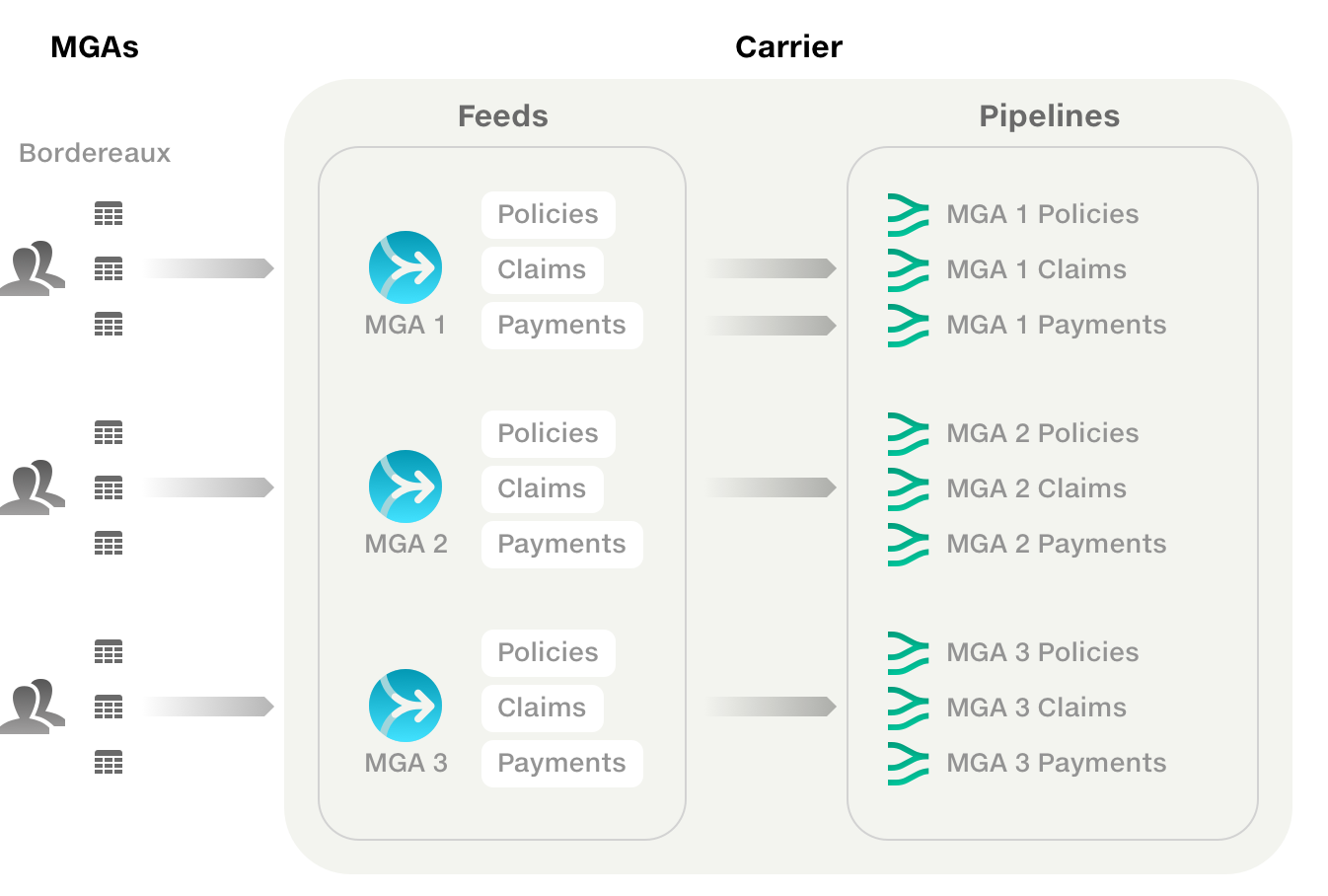
A capacity provider requests monthly bordereaux for premium and claims from 50 MGA partners.
- Each MGA is assigned one feed.
- Each feed has one subsection for Policies, one for Claims, one for Premium Payments.
- A schedule is set to match the terms of the binding authority.
- The Policy, Claims and Premium Payments data feed is connected to the corresponding pipelines at the Insurer.
- If Policy, Claims and Premium subsections for each MGA should be processed at the same time, they can be fed into a single pipeline for each MGA, as inputs into different stages. If the subsections should be processed at different times, individual pipelines can be set up to process each subsection.
When bordereaux are due an automatic data request is sent to each MGA. Once the MGAs have submitted their data, it is automatically validated, cleansed and restructured ready for use in the insurers risk management and financial reporting systems.
Use Case: SoV processing
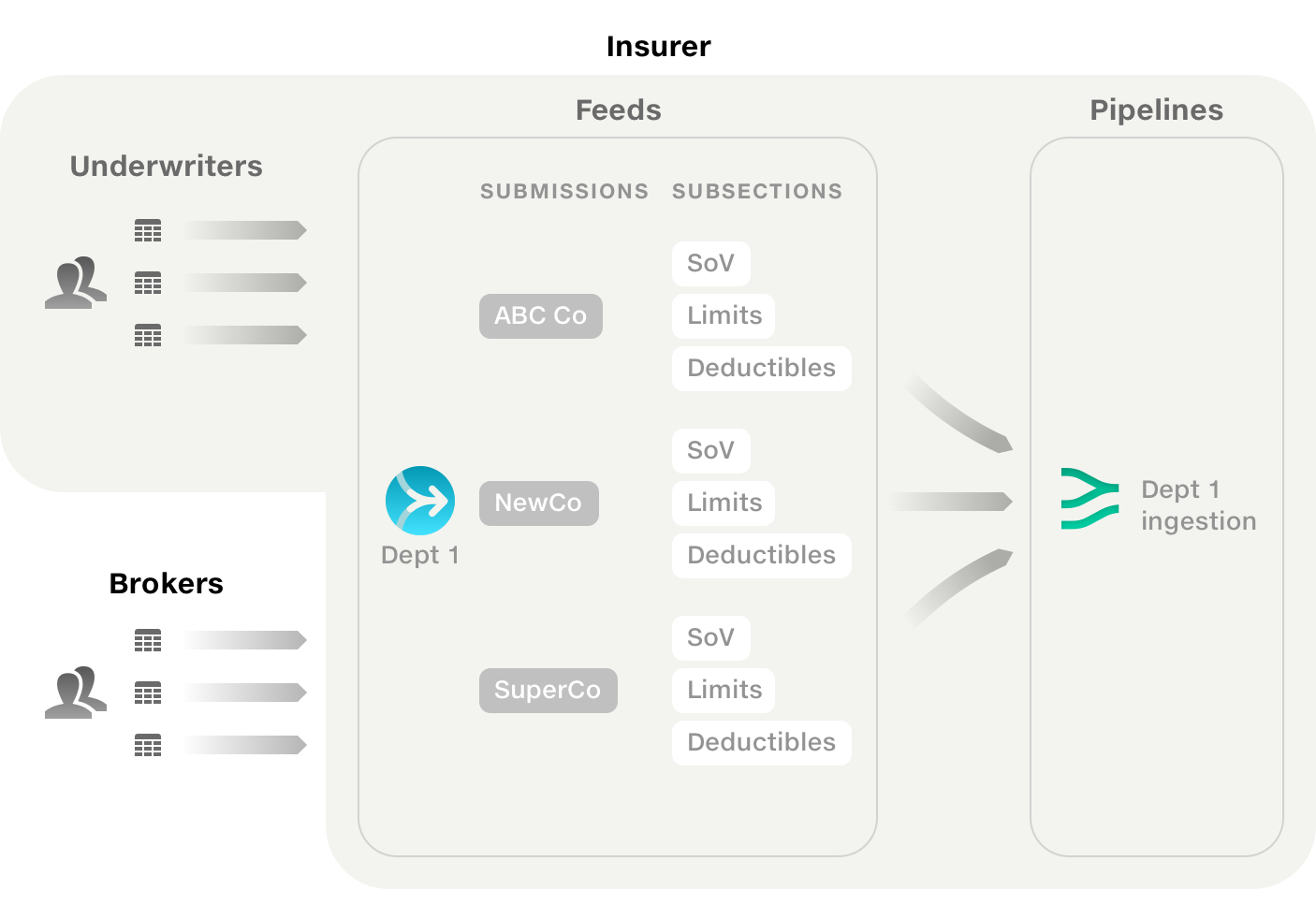
An insurer processes Schedules of Values (SoVs) for a property book, to feed risk and pricing models. The SoVs comprise three parts which must be processed separately: SoV, Limits, Deductibles.
- A feed is set up for a department.
- A submission is assigned to each assured.
- The submission contains a subsection for each of the SoV, Limits and Deductibles tables.
When the risk data is available, it is uploaded to the relevant submission by the insurer (or directly by the broker if the insurer wishes). The uploader assigns each component to the correct subsection. These are fed through automatically to the correct pipeline stages.
Use Case: Treaty reinsurance
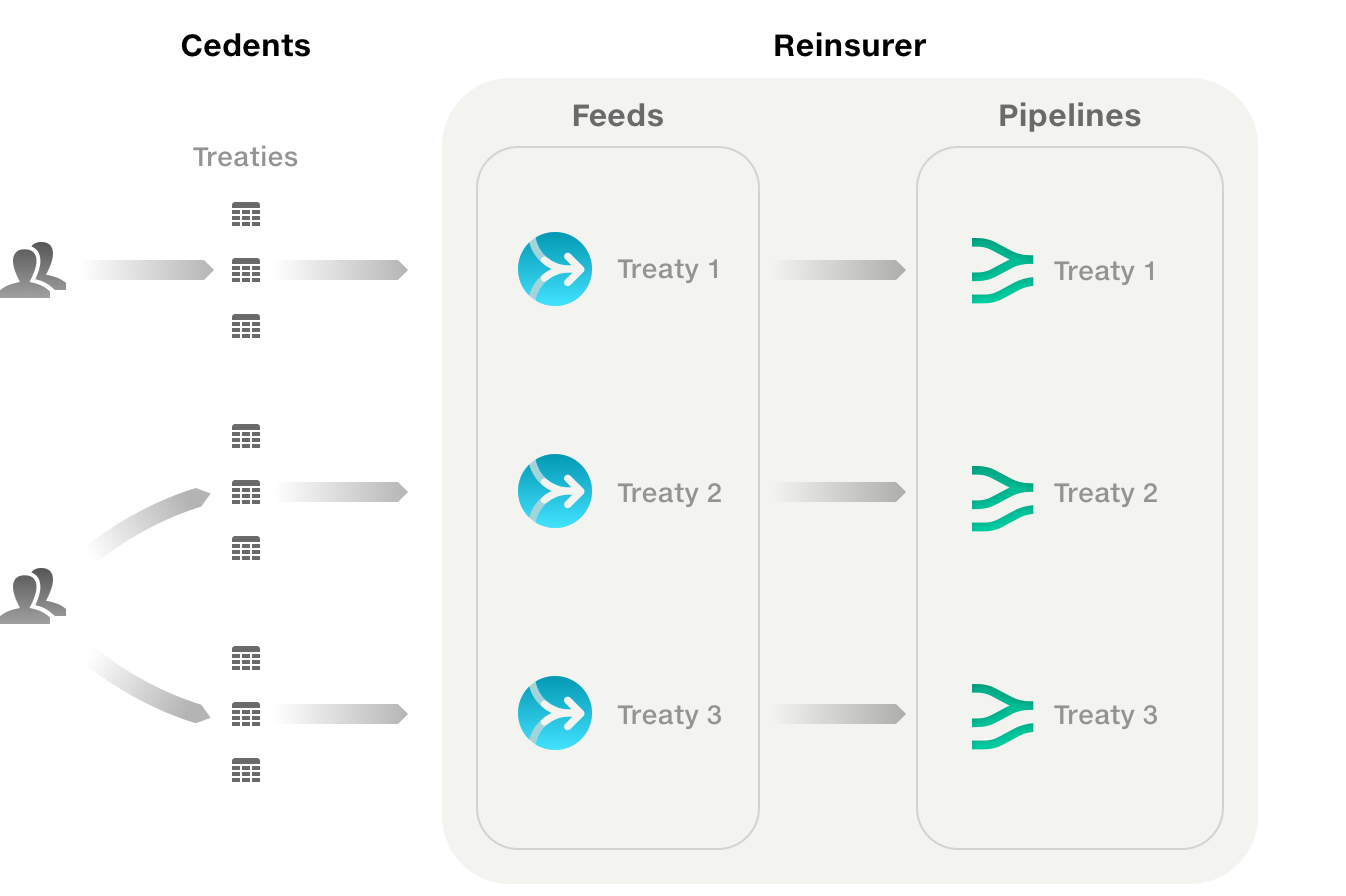
A reinsurer receives monthly data from numerous treaties across multiple cedents. Each treaty operates for a fixed period of time.
- Each treaty is assigned one feed.
- A reporting schedule is assigned, set to expire at the end of the treaty period.
Each reporting period the treaty data requests are sent to the cedents in line with the schedule. When the cedents submit data, it is automatically fed through to a pipeline for that treaty. When the treaty expires, the cedent no longer receives requests.
Use Case: MGA reporting to multiple carriers
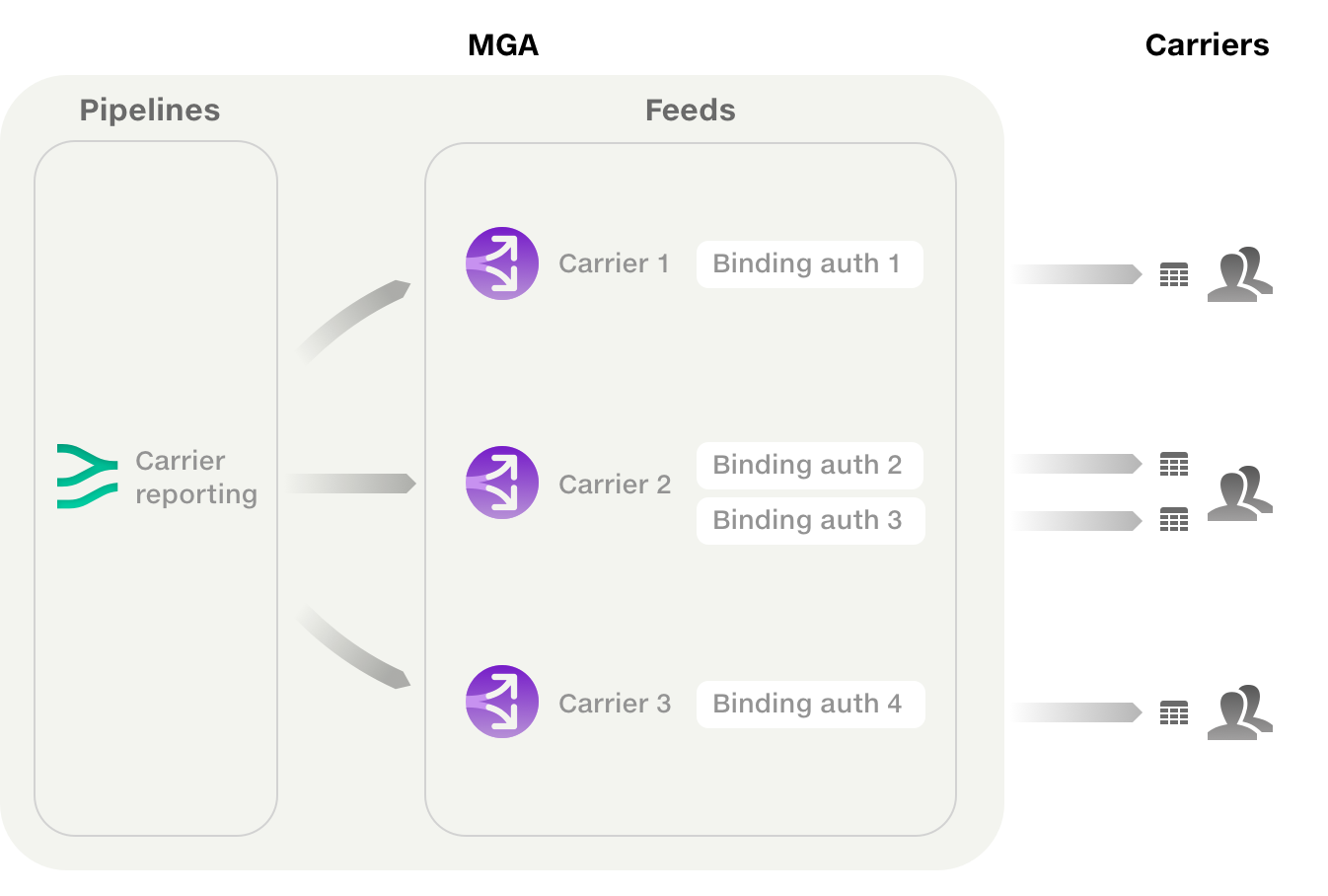
An MGA has multiple carriers supporting the same binding authority and each carrier requests different risk data and details of their share on every declaration.
- The original policy data is transformed through a pipeline to generate bespoke outputs for each carrier.
- The MGA sets up one feed per carrier (with multiple subsections if they support more than one binding authority).
- The MGA sets the reporting schedule in line with the binder terms.
When the reporting day arrives the pipeline automatically runs and sends the personalised data to each of the corresponding carriers.
Brokers intermediating between cedents and reinsurers
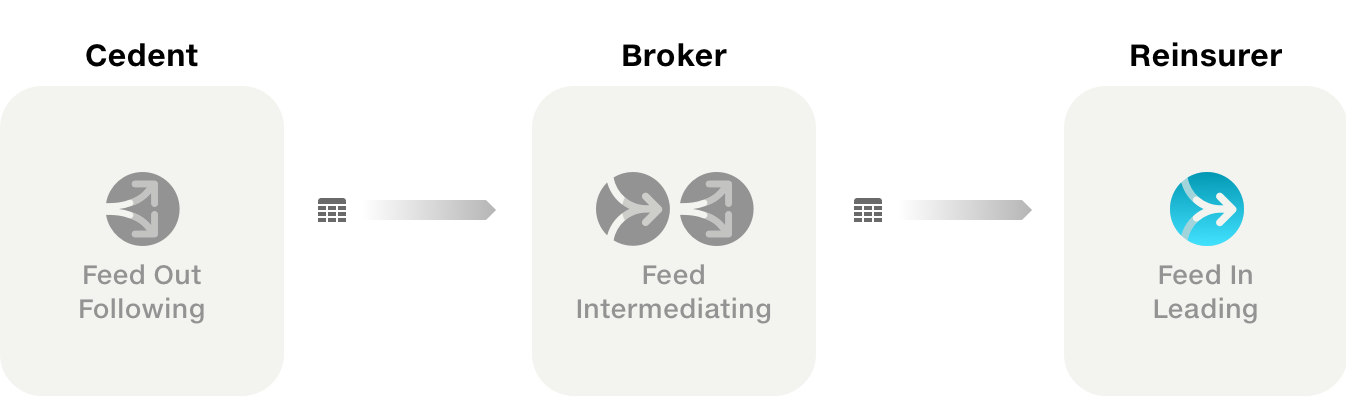
A reinsurer requesting bordereaux under a treaty will contact the placing broker for the data. In turn the broker must obtain the information from the ceding company.
- The reinsurer sets up a leading Feed In to request data via a broker
- The broker has access to a following Feed Out to pass data to the reinsurer.
- The broker converts their Feed Out to a Feed In-Out for the ceding company, which automatically applies the same subsections and schedule as the original reinsurer request.
When the data is submitted by the cedent and received by the broker a copy of the data is automatically passed to the reinsurer with all parties retaining full access to the data, including any further revisions made through a resubmission request.